

Eye Movement Desensitization and Reprocessing (EMDR) is an effective psychotherapy used for addiction treatment that addresses past traumas that may have inflicted mental health disorders such as PTSD.
EMDR helps individuals heal from emotional distress and identify negative behavioral symptoms. In fact, studies show that EMDR provides quicker healing results in a few sessions versus traditional therapy. This is because EMDR breaks down emotional barriers in the brain by unblocking and addressing avoided emotions pertaining to trauma and substance use in order to attain emotional balance and stability.
It is common for individuals to simultaneously struggle with addiction and other mental health such as PTSD, anxiety, and depression. Psychologists have discovered that EMDR effectively targets both disorders. Individuals with trauma often self-medicate, seeking relief from emotional pain and disturbing memories. EMDR addresses the underlying trauma that causes self-medicating behavior.
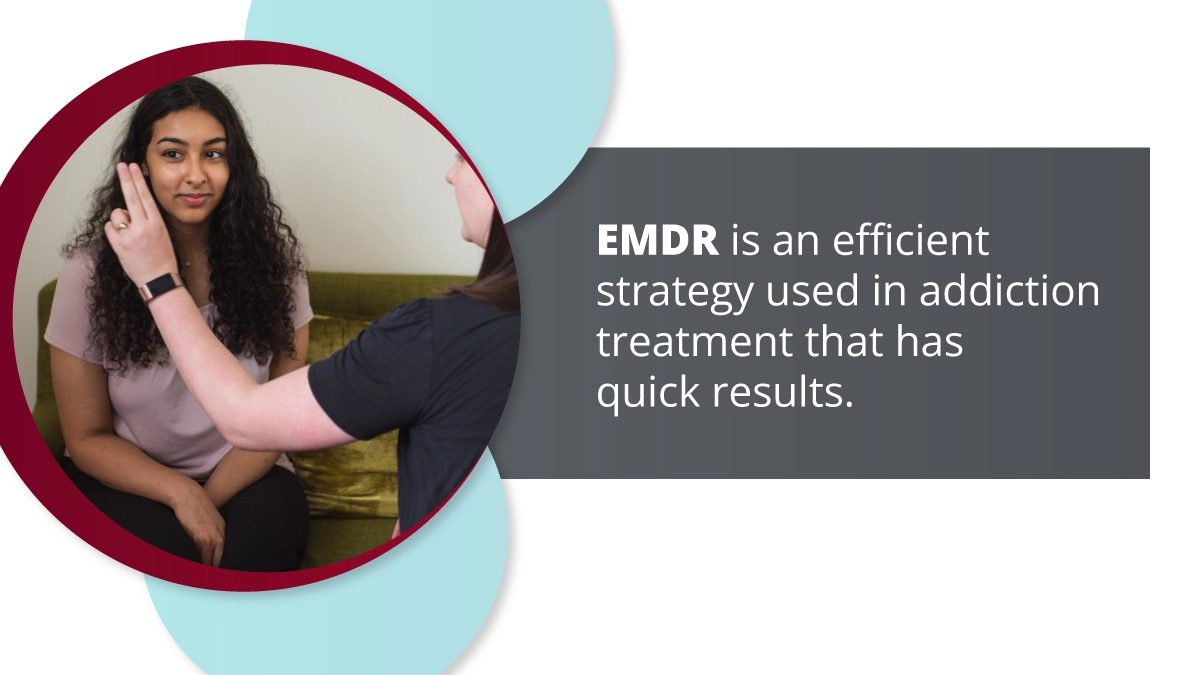
EMDR is an efficient strategy used in addiction treatment that has quick results. EMDR targets the brain to eliminate negative emotions in place of positive beliefs. This psychotherapy approach is successful but also unique due to its simplicity and quick progress without any chemical influences necessary.
During an EMDR session, a therapist guides the patient through a series of standardized procedures to stimulate bilateral brain activity. This stimulation can be achieved through several methods, with the most common being the side-to-side eye movement of the eyes. Other techniques include sounds or taps. The EMDR techniques assist patients in turning their awareness to the past, present, and future to help resurface causes and insights about deep-rooted problems.
First, the therapist guides a patient to focus on the past, where they remember specific trauma in detail. They express their emotions, details, and sensations about their experience. When a patient brings the past to life, therapists then have a better understanding of how the trauma affects the patient for psychological healing.
Second, the therapist then guides a patient to the present. Here, the patient explores different situations and feelings that cause distress in their daily lives. Here, therapists help patients evaluate negative emotions and compare them to a positive belief as a replacement. The patient is then asked to log thoughts and feelings that come up during events throughout the week and document how they coped. This helps patients become self-aware and use the replacement strategy to remain calm.
Third, the therapist guides patients’ outlook on the future. The therapist and patient then examine the progress made. Together, they overlook the past traumas that have been addressed, observe current experiences, and note possible future challenges. The therapist helps the patient anticipate healthy responses the patient may face for future struggles and compares them to how they have reacted in the past.
Overall, EMDR therapy focuses on the traumatic memory and is intended to change the way the memory is stored in the brain to reduce and eliminate problematic symptoms.
If you’re struggling with trauma, PTSD, anxiety, depression, or addiction, EMDR therapy offers a faster, more effective approach to healing than traditional talk therapy. Studies show that EMDR provides quicker healing results in fewer sessions by helping your brain process traumatic memories and reduce their emotional impact. At Indiana Center for Recovery, our trained therapists use EMDR therapy as part of comprehensive treatment programs for mental health conditions and addiction treatment, addressing the trauma that often underlies both conditions. Our integrated dual diagnosis treatment uses EMDR therapy to address the root causes of trauma while treating mental health and substance use disorders simultaneously.
Don’t let trauma continue to control your life. We offer treatment centers across Indiana where our trained therapists provide EMDR therapy as part of comprehensive treatment programs that include inpatient psychiatric services, residential treatment, and flexible outpatient treatment options. Our compassionate team will work with you to develop a personalized treatment plan that includes EMDR therapy, medication management when needed, and ongoing support to help you heal. Call us right now at (844) 650-0064 to speak with our team and learn how EMDR therapy can help you break free from trauma and start your journey toward healing.
You’re reading this for a reason. Even if you don’t know if you’re “ready”, now is the best time to reach out.
 100% Confidential
No judgment
No commitment
 Call (844) 650-0064
  Verify Your Insurance

Error: Contact form not found.
 Get Answers Now
You don’t have to figure this out alone. We can guide you through your options—completely confidential and with zero commitment.
100% Private